Make the Library a destination, not a shortcut
State Library Victoria at 328 Swanston Street is both a working public library and a major cultural building. The City of Melbourne describes it as Australia’s oldest public library and notes its heritage interiors, collections and gallery spaces. That combination makes it easy to over-plan. The best first visit chooses one purpose: settle in to read, see a public space, explore a gallery or take a quiet break between nearby city activities. Treat everything else as optional and give yourself enough time to move at the Library’s pace.
Start with one space
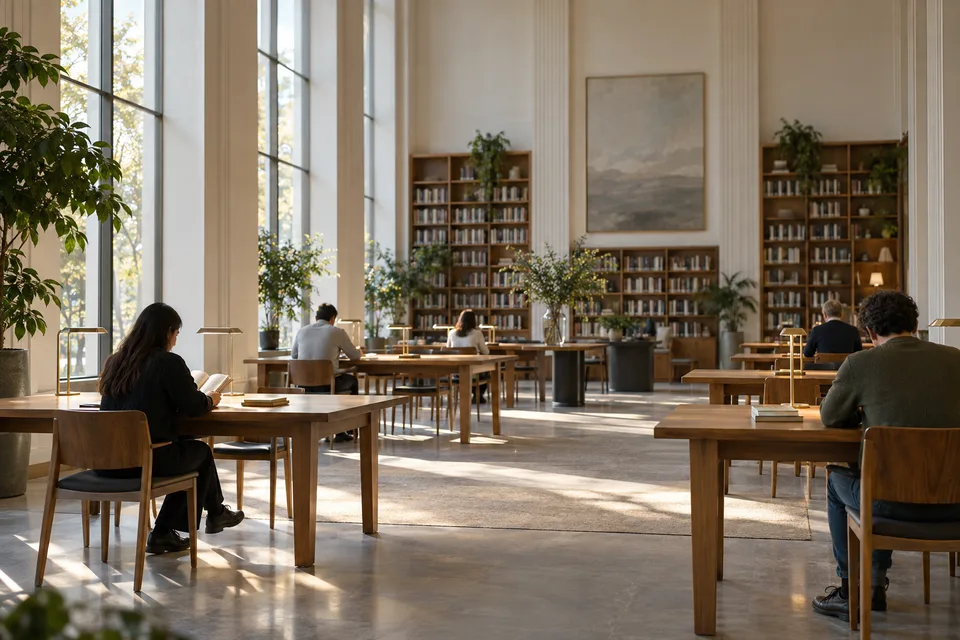
The La Trobe Reading Room is a natural point of interest, but it is not the only reason to visit. Begin at the current visitor information point, orient yourself, then choose one reading room, gallery, public area or outdoor pause. The City listing notes heritage interiors, exhibitions and guided tours, but spaces, access arrangements and programs can change. A short, intentional route is better than racing from floor to floor. If a particular room is important to your visit, check the Library’s own current information before travel.
Use published hours as a guide
The City listing gives daily public hours of 10 am to 6 pm. Confirm directly with State Library Victoria before travelling if a holiday, temporary closure, tour, exhibition or specific workspace matters to your plan. Arriving earlier in the day can provide more time to find your bearings; a late visit works best when you have one clear purpose. Do not rely on an evergreen guide for a particular room’s availability or entry point, as library operations and event set-ups can change the practical route.
Choose the right kind of visit
A library visit can be active or quiet, but the purpose should be clear. For a cultural stop, choose a gallery or architectural space and leave time to read interpretation. For study or reading, bring only what you need and allow time to find a suitable public area. For a family or group visit, agree on a meeting point and keep expectations aligned with a shared library environment. Temporary tours and events can be excellent additions, but check them directly rather than building the whole day around an out-of-date listing.
Respect shared spaces
The Library is used by researchers, students, visitors and staff at the same time. Keep calls, group conversations and photography expectations in line with current on-site guidance. Food, drink, bags and access rules can vary by space, so follow signs and staff direction rather than assuming one rule applies everywhere. The strongest visit is curious but considerate: slow down, use the spaces for their intended purpose and let other people work without interruption. That approach also makes the heritage rooms more enjoyable.
Access and practical needs
Confirm tailored accessibility, seating, lifts, accessible entry points, toilets, lockers, assistive needs or quiet-space requirements with State Library Victoria before travel. The City listing offers broad orientation, not a complete access plan. If mobility, sensory needs or a limited time window will shape the visit, choose one area and a direct route rather than attempting a full building circuit. A shorter, comfortable visit is much more useful than trying to see every public space.
Pair it with the northern city
The Library works well with one nearby purpose: a Swanston Street walk, a quiet coffee outside the building, Melbourne Central or a northern-grid cultural stop. Keep the pairing close so that the Library remains a real part of the day rather than a brief transition. Give yourself a buffer for entry, finding a room and lingering over something unexpected. A good city itinerary lets the building determine the pace for a while, then moves on without rushing.
Before you go
Confirm current public hours, access arrangements, room availability and any event or exhibition that matters directly with the Library. State Library Victoria is best visited with a simple intention: choose a space, spend enough time to use it well and leave room for a calm pause before the next part of the city day.
Sources
Sources last validated: 14 September 2026.