Start with a map, then let the city change the plan
Melbourne is easier to enjoy when the day begins with a few connected areas rather than a long checklist. The City of Melbourne’s visitor service brings together maps, transport-planning links, attractions, walks and local guidance. Use that information to choose an anchor—perhaps a gallery, a market, a theatre booking or a park—and let the streets between it and the next stop do some of the work. The central city is compact enough for a plan to evolve, but a map helps prevent the common mistake of treating every neighbourhood as a quick detour from the same point.
Follow the lanes and arcades with time to pause
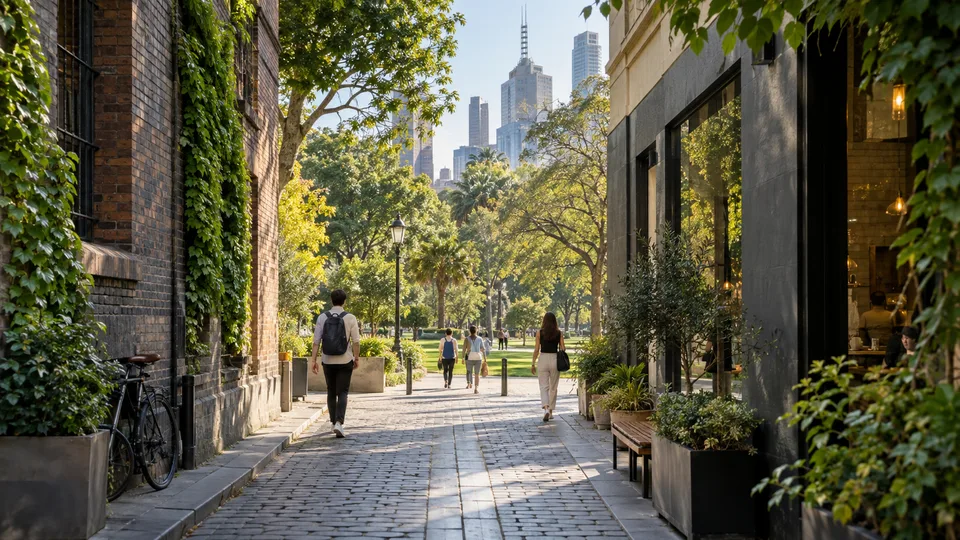
The City of Melbourne identifies laneways and street art among the city’s visitor experiences, alongside cafes, bars and boutiques. That does not mean every lane needs to become a destination. A useful approach is to choose one small stretch between larger commitments, look up rather than only at shopfront level, and allow time to stop where a doorway, gallery or arcade genuinely appeals. This keeps the laneways as a way of moving through the city rather than a task to complete. Conditions, businesses and access can change, so current city information is more reliable than a fixed list remembered from an older guide.
Make culture one substantial part of the day
Melbourne’s visitor information points readers towards galleries, museums, theatre and other cultural experiences. The strongest visit is usually built around one main institution or performance rather than several rushed entrances. Give a gallery or museum enough time to follow a thread through its collection, then use a nearby laneway, public square or meal as the transition to the next part of the day. For theatre and ticketed experiences, check the official operator or venue information before leaving home: programmes, entry arrangements and accessibility services are practical details that change more often than a guide can safely promise.
Keep green space in the itinerary
A city day does not need to be entirely indoors. The City of Melbourne includes lush parks among the attractions it directs visitors towards, alongside laneways, street art and galleries. Let a park be a genuine part of the plan, not merely a convenient patch of grass between bookings. Choose one that suits the shape of the day, check its current conditions and access advice, and allow time for the pace of the visit to change. A slower green-space pause can reset attention before a museum, performance or evening meal.
Plan travel around the current network
The City of Melbourne notes that visitors can move through the city by bike, tram, bus, train or taxi. The exact route is the part to check on the day. The City’s travel information and visitor maps are better starting points than an old timetable or a route copied from social media, particularly when an event, works or weather changes the easiest way through the centre. If a specific connection matters, allow a little buffer rather than packing the day to the minute. A loose final hour often produces a better city visit than a sequence of fragile reservations.
Use visitor services when a choice needs local context
The City of Melbourne’s visitor information lists the Melbourne Visitor Hub, Melbourne Visitor Booth, Melbourne Visitor Pod, Fitzroy Gardens Visitor Centre and City Ambassadors as places to seek maps, tips and recommendations. These are useful when a plan needs a reality check: a visitor service can help turn a broad interest in art, food, parks or a walk into a practical next stop. They are also a sensible starting point for questions about access. Readers with a particular mobility, sensory or other access requirement should use the City’s current accessibility information and contact an operator directly when a detail is essential.
Acknowledge place, then explore with care
The City of Melbourne acknowledges the Wurundjeri Woi-wurrung and Bunurong / Boon Wurrung peoples of the Kulin as Traditional Owners of the land it governs, and recognises their continuing connection to place. That acknowledgement belongs in a Melbourne orientation, but it is not a substitute for learning from First Peoples’ own organisations, galleries and cultural institutions. When a visit includes Aboriginal cultural material, follow the interpretation and any photography or cultural-sensitivity guidance provided at the venue. A respectful itinerary leaves room to listen rather than treating culture as a decorative layer on a city break.
Build a Melbourne rhythm rather than a perfect schedule
For a first visit, pair one focused cultural or food stop with a walkable precinct and an open-air break. City visitor information can connect the pieces, while current travel advice can keep the plan realistic. Melbourne rewards attention to the transitions as much as the headline attractions: an arcade between appointments, a public garden after a gallery, or a slower route home by tram or on foot. Keep the final choices flexible, confirm time-sensitive details close to travel, and leave enough room for the city itself to alter the route.
Sources
Sources last validated: 14 September 2026.