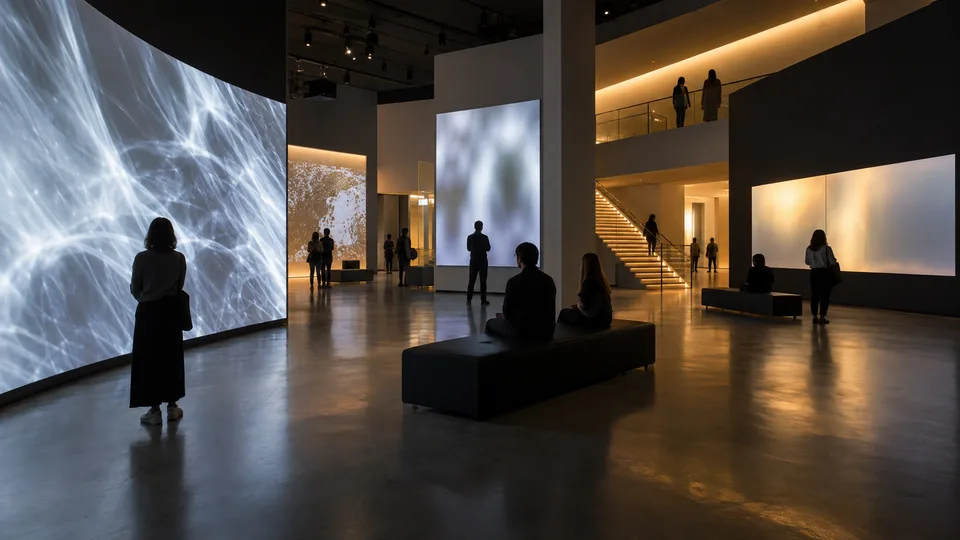
A screen-culture stop at Fed Square
ACMI is Melbourne’s museum of film, television, videogames and art, set within Fed Square on Flinders Street between Swanston and Russell streets. It works particularly well as a flexible city-centre visit: the museum has free entry, while some events and cinema sessions are ticketed. That distinction matters when planning. You can make a short visit around the permanent screen-culture experience, or build a longer outing around a booked screening, exhibition or talk. Check the official programme before travelling rather than assuming every activity has the same entry conditions.
Choose the right amount of time
The museum is open daily from 10 am to 5 pm, except Christmas Day, with altered hours on Anzac Day. Those are museum hours, not a promise that every cinema session or special programme follows the same pattern. A useful first visit is to begin with the exhibition spaces and then decide whether a session or event deserves a separate booking. The Story of the Moving Image is designed to be experienced through doing as well as watching, so leave room to pause at the interactive elements instead of treating the museum as a checklist of objects.
Arriving without a scramble
ACMI has entrances at the upper end of the Fed Square plaza and on Flinders Street, where the revolving door is open from 10 am to 5 pm. The plaza entrance stays open until the final event or session. The venue notes current construction affecting the Swanston Street and Flinders Street pedestrian crossing, and recommends approaching via the Russell Street crossing or the Swanston Street crossing outside Flinders Street Station. Most city trains and trams can bring you close to ACMI; Fed Square is opposite Flinders Street Station and inside the Free Tram Zone. Recheck route conditions on the day, especially when arriving for a timed session.
Make use of the practical facilities
Lifts serve every level, and toilets are on the ground floor and Level 1; the venue lists wheelchair-accessible and gender-neutral toilets on both levels. Baby-change facilities sit near the toilets at the Flinders Street and Fed Square entrances. Some exhibitions may ask visitors to cloak backpacks, larger bags or umbrellas, so avoid relying on bulky belongings when you have a tightly timed screening. The cafe and bar on Level 1 serves snacks, light meals, coffee and drinks, with hours that can extend for cinema sessions. The shop is another easy end point if you want to browse books, gifts and design-led items without adding another stop to the day.
Plan access as part of the visit
ACMI provides visual stories, sensory guides, lifts, accessible toilets, wheelchairs and other mobility equipment, hearing loops, guide-dog information and Companion Card guidance. Its visual story is intended for people who would benefit from a step-by-step picture-and-text explanation of arrival and the different spaces. Those resources make a quieter, more predictable visit easier to prepare, but they should not replace a direct check if you need a particular support, a particular event format or a current change to building access. Contact ACMI or consult the specific event page before booking where the detail matters.
A simple city-centre rhythm
ACMI is strongest when it is given a clear role in the day: an unhurried morning museum visit, a sheltering stop between city walks, or a booked cinema session that anchors the evening. Avoid overfilling the same window with Fed Square, riverfront and lane explorations. Arrive, orient yourself at the information desk, decide which spaces suit your time, and leave enough margin for entry requirements or a session start. The museum welcomes families, though children under 13 must be accompanied by an adult; prams are generally welcome but may need to be left in the cloakroom in exceptionally busy exhibitions. That is the kind of local practical detail that makes the visit calmer for everyone.
Before you go
Confirm opening hours, current exhibitions, session times and any ticket requirement on ACMI’s own pages. Check the chosen entrance and route on the day, particularly while central-city works are affecting crossings. If photography is part of your visit, ACMI permits it in the museum subject to signs and restrictions, but does not allow photography or filming during cinema screenings. Respecting those boundaries protects the shared experience and avoids a disappointing interruption. A small amount of preparation turns ACMI from a vague cultural stop into a genuinely useful Melbourne visit.
Sources
Sources last validated: 14 September 2026.